PRODUCT INFORMATION
Product Overview
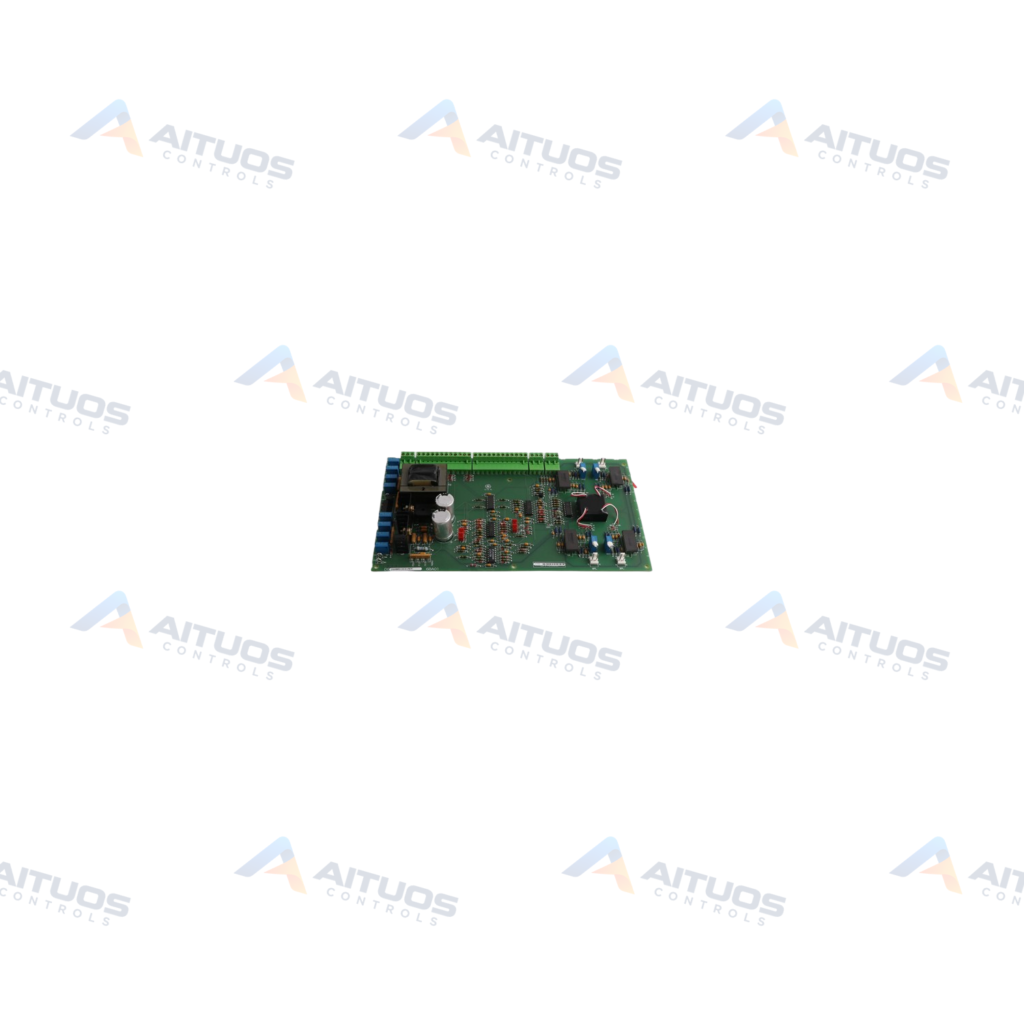
The General Electric DS200SIOCG1A is a VME Stand I/O Board for the Mark V turbine control series. This board serves within Speedtronic control systems managing gas, steam, and wind turbine drive assemblies. It represents a Group 1 assembly revision within the legacy Mark V platform. The unit provides field wiring connection points for processing signals in industrial turbine control racks.
This circuit board features five wire terminal blocks designated TB-1 through TB-5. These screw terminals accommodate up to 33 individual signal wires for transmitted and received processing signals. The board includes a normal style PCB surface coating to protect onboard components. Hardware provisions also include one protective fuse and four separate 2-pin circuit connectors.
TECHNICAL DATA
Technical Specifications
| Parameter | Specification |
|---|
| PCB Coating | Normal Coating |
|---|
TECHNICAL INFORMATION
Features
- Features five terminal blocks labeled TB-1 through TB-5 for signal wiring.
- Accommodates up to 33 signal wires secured by individual screw terminals.
- Includes one onboard protective fuse.
- Equipped with four 2-pin circuit interface connectors.
- Manufactured with a normal style printed circuit board protective coating.
TECHNICAL INFORMATION
Applications
- General Electric Mark V Speedtronic turbine control systems.
- Gas turbine drive management and control assemblies.
- Steam turbine automation control panels.
- Industrial wind turbine drive control enclosures.
TECHNICAL INFORMATION
Connections / Interfaces
- Five terminal blocks labeled TB-1, TB-2, TB-3, TB-4, and TB-5.
- Screw-tightened terminals supporting up to 33 individual signal wires.
- Four onboard 2-pin interface connectors.
TECHNICAL INFORMATION
Installation Guidelines
- De-energize all power from the control rack before servicing the board.
- Follow electrostatic discharge procedures to protect sensitive electronic components.
- Verify that potentially lethal surface voltages are absent before contact.
- Tag each signal wire with its designated terminal identifier prior to removal.
- Loosen terminal screws to disconnect wiring and remove the existing board.
- Insert the bare portion of each wire into the terminal and tighten securely.
- Pull gently on each reattached wire to confirm mechanical retention.
TECHNICAL INFORMATION
Compatibility
- Engineered for General Electric Mark V Speedtronic turbine control systems.
TECHNICAL INFORMATION
Lifecycle / Replacement Information
- The Mark V series is an obsolete legacy turbine control platform.
- Part number DS200SIOCG1A features an A-rated functional revision over parent board DS200SIOCG1.
COMPATIBILITY
Compatibility & Replacement
COMPATIBLE MODELSEngineered for General Electric Mark V Speedtronic turbine control systems.
Verify compatibility against the exact Part Number, revision and manufacturer documentation before ordering.
PART VERIFICATION
Before You Order
Industrial automation parts can share similar model names, suffixes and revisions. Confirm the complete manufacturer Part Number before purchase.
01Check Part NumberMatch the complete ordering code on the existing unit.
02Confirm RevisionCheck suffix, hardware or firmware when applicable.
03Send a Label PhotoWe can review a clear label photo when identification is uncertain.
ORDERING PROCESS
From RFQ to Dispatch
1Submit Part Number2Verify Product Identity3Confirm Stock & Condition4Issue Quotation5Dispatch & Tracking
PRODUCT FAQ
Frequently Asked Questions
What is the primary function of the GE DS200SIOCG1A board?
The board provides field signal wire interfacing for Mark V Speedtronic turbine control systems.
How many field signal wires does the DS200SIOCG1A support?
The board connects up to 33 signal wires across five terminal blocks labeled TB-1 through TB-5.
What onboard hardware elements are present on the DS200SIOCG1A?
The circuit board includes one protective fuse and four 2-pin interface connectors.
What safety guidelines apply when handling the DS200SIOCG1A?
Personnel must remove power, observe ESD safeguards, and check for potentially lethal surface voltages.