PRODUCT INFORMATION
Product Overview
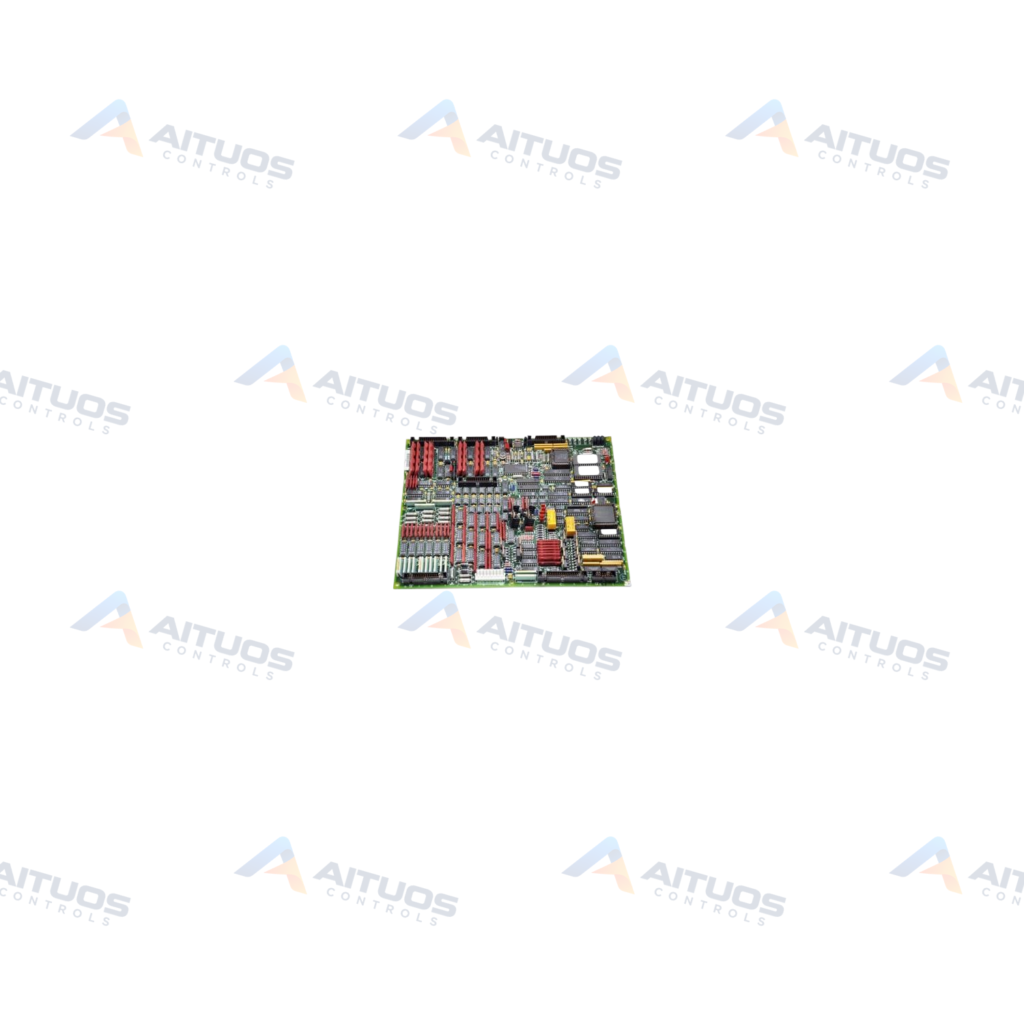
The General Electric DS200TCQBG1BBA is an RST Overflow Card designed for the Mark V Turbine Control System. It supports management and control architectures in compatible gas, steam, and wind turbine automated drive assemblies. The unit features corner mounting holes drilled at each corner for secure mechanical installation inside the drive cabinet. Factory markings display the General Electric logo alongside the unique printed circuit board identification code.
This assembly incorporates two functional B revisions and one artwork revision A on the parent DS200TCQBG1 base design. The circuit surface carries two relays, vertical pin connectors, plug connectors, transistors, and integrated circuits including field programmable gate arrays. Over twelve configuration jumper switches allow hardware adjustment, including five jumpers arranged in a single row. Two corner heat sinks provide thermal dissipation to maintain normal operating temperatures for heat-generating board components.
TECHNICAL DATA
Technical Specifications
| Parameter | Specification |
|---|
| Original GE Manufacturer | General Electric |
|---|
| Mark V Series Grouping | Group 1 |
|---|
TECHNICAL INFORMATION
Features
- Equipped with two dedicated heat sinks to maintain proper thermal regulation during operation.
- Includes vertical pin and plug connectors for drive cabinet wiring and module interfacing.
- Contains more than twelve jumper switches including a five-jumper aligned configuration bank.
- Features integrated circuits including field-programmable gate arrays and resistor network arrays.
- Constructed with corner mounting holes for standard mechanical installation inside turbine drive enclosures.
- Provides a green diagnostic LED indicator for visual hardware status monitoring.
TECHNICAL INFORMATION
Applications
- Mark V gas turbine control and automated drive systems.
- Steam turbine automation and drive control assemblies.
- Compatible wind turbine generator management architectures.
TECHNICAL INFORMATION
Connections / Interfaces
- Vertical pin connectors for backplane and system signal routing.
- Plug-style terminal connectors for modular harness integration.
TECHNICAL INFORMATION
Installation Guidelines
- Fasten the board securely using the mounting holes drilled at each corner.
- Ensure adequate clearance around both corner heat sinks for convective airflow.
- Follow electrostatic discharge precautions before handling sensitive printed circuit board components.
TECHNICAL INFORMATION
Configuration Guidelines
- Set hardware jumpers in accordance with the specific Mark V turbine application requirements.
- Verify the positions of the five-jumper linear array before applying power.
- Cross-reference component reference designators against General Electric system technical documentation.
TECHNICAL INFORMATION
Lifecycle / Replacement Information
- The DS200TCQBG1BBA represents a revised build of the parent DS200TCQBG1 RST Overflow Board.
- It incorporates two functional B-level revisions alongside an A-level artwork configuration revision.
PART VERIFICATION
Before You Order
Industrial automation parts can share similar model names, suffixes and revisions. Confirm the complete manufacturer Part Number before purchase.
01Check Part NumberMatch the complete ordering code on the existing unit.
02Confirm RevisionCheck suffix, hardware or firmware when applicable.
03Send a Label PhotoWe can review a clear label photo when identification is uncertain.
ORDERING PROCESS
From RFQ to Dispatch
1Submit Part Number2Verify Product Identity3Confirm Stock & Condition4Issue Quotation5Dispatch & Tracking
PRODUCT FAQ
Frequently Asked Questions
What is the primary function of the DS200TCQBG1BBA card?
The card functions as an RST Overflow board in General Electric Mark V turbine control drive systems.
What revisions are incorporated into the DS200TCQBG1BBA?
It includes two B-rated functional revisions and one A-rated artwork revision on the base DS200TCQBG1 design.
How does the DS200TCQBG1BBA manage thermal dissipation?
Two heat sinks mounted near one corner dissipate heat away from critical onboard electronic components.