


Why Manufacturing Data Still Fails to Connect Across Company Systems
Manufacturers are investing heavily in connected equipment, software and digital workflows, but the data flowing through those systems is still far from unified. New research highlighted by Automation World shows a significant gap between companies that describe their operations as connected and those that actually have data integrated across design, production, quality and business systems.
The distinction matters because a plant can have connected machines, historians, ERP platforms, quality databases and engineering software without having a consistent operational view. Connectivity at the device level does not automatically create connected decision-making.
Connected Operations Are Not the Same as Connected Data
Automation World reported findings from Hexagon’s 2026 America’s State of Manufacturing research. According to the report, 77% of manufacturers described their operations as connected, but only 40% reported fully connected data across systems.
The same research found that 67% did not have data from most systems integrated into a single view. Another 39% reported limited feedback between design, manufacturing and quality teams.
Those numbers expose a common digital-transformation problem: companies often modernize one function at a time. ERP, MES, quality software, CAD/CAM, historians and machine-level automation may each solve a specific problem, yet remain weakly connected to one another.
Why Manufacturing Data Becomes Fragmented
Factories rarely receive all of their software and automation as one coordinated system. Equipment is added over decades. Production lines are upgraded at different times. Business systems change independently from controls platforms.
As a result, one plant may operate several generations of PLCs, multiple SCADA or HMI platforms, separate quality databases and a business system that uses its own data structure. Each layer can work correctly while the overall information flow remains fragmented.
This is why digital transformation should be evaluated as an architecture problem rather than a software-purchase problem. A new dashboard cannot fix missing context, inconsistent naming or data that never leaves an isolated system.
Quality Problems Reveal the Cost of Disconnected Information
The Hexagon research also linked data fragmentation with quality challenges. Automation World reported that almost 70% of manufacturers lose at least six hours per week to quality issues, while 42% said problems are identified too late.
Late detection often becomes more expensive because the root cause may already have propagated through multiple production steps. Engineers may need to compare machine conditions, production records, quality results and maintenance events before they can identify what changed.
When those records live in different systems, investigation becomes slower and more dependent on manual exports, spreadsheets and individual experience.
The Shop Floor and Executive View Can Be Very Different
One of the most important findings concerns perception. The research showed a wide difference between how executives and shop-floor personnel view data integration.
Automation World reported that 80% of executives considered their data integrated, while only about one-third of shop-floor respondents agreed. That gap suggests that enterprise visibility can look complete from a reporting layer while operators and maintenance teams still face missing information during daily work.
A useful integration project should therefore begin by asking where information breaks down during real tasks. Examples include troubleshooting a recurring machine stop, tracing a quality deviation or determining whether a maintenance event affected production performance.
AI Depends on Better Manufacturing Context
Artificial intelligence can analyze large datasets, but industrial AI is only as useful as the context provided to it. A model needs to understand which machine produced a signal, what product was running, what operating mode was active and whether the data represents normal or abnormal conditions.
This is closely related to the industrial AIoT architecture discussed in our Siemens industrial AIoT analysis. Platforms can aggregate operational data, but the larger challenge is creating relationships between equipment, process and business information so that analytics produce useful decisions.
What Manufacturers Should Connect First
Trying to integrate every system at once is rarely practical. A better approach is to begin with one operational problem and identify the minimum set of data needed to solve it.
- For quality issues, connect production conditions with inspection results and product identifiers.
- For downtime analysis, connect alarms, machine states, maintenance events and production schedules.
- For energy optimization, connect machine consumption with production volume and operating mode.
- For predictive maintenance, connect condition signals with asset identity, service history and load conditions.
This approach turns integration into a measurable engineering project. It also creates a cleaner foundation for later analytics and AI applications.
Legacy Automation Makes Context More Important
Many manufacturing sites will continue using older control hardware because replacing an entire automation architecture is expensive and disruptive. Integration therefore needs to accommodate legacy PLCs, remote I/O, drives and monitoring systems alongside newer platforms.
Modernization does not always require immediate replacement. In many cases, the first step is to expose useful operating data safely and give it consistent asset and process context.
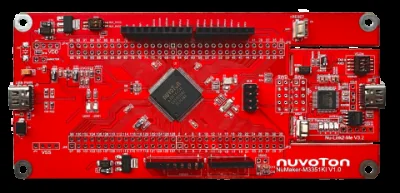
The same principle applies at the controller level. Newer embedded platforms such as the Nuvoton NuMicro M3351 demonstrate how modern processing, communication and security functions are increasingly being integrated closer to machines and devices.
Data Integration Is an Operational Discipline
Connected manufacturing should not be measured by the number of networked devices or dashboards. The more meaningful question is whether the people responsible for production, maintenance, engineering and quality can access the information they need at the right time.
The Hexagon findings suggest that many manufacturers have already built significant digital infrastructure. The next challenge is making that infrastructure work as a connected system rather than a collection of independent tools.
Source and Original Author
Original author: Sarah Mattalian, Staff Writer
Original publication: Automation World, September 23, 2026
Original article: Q&A: Manufacturers Lack Connected Data Across Company Systems
This AITUOS Controls article is an independently rewritten technical analysis based on the reported research and interview. The original Automation World article remains the primary source for the survey findings.