
PLC Commissioning Checklist: From Bench Test to Production Handover
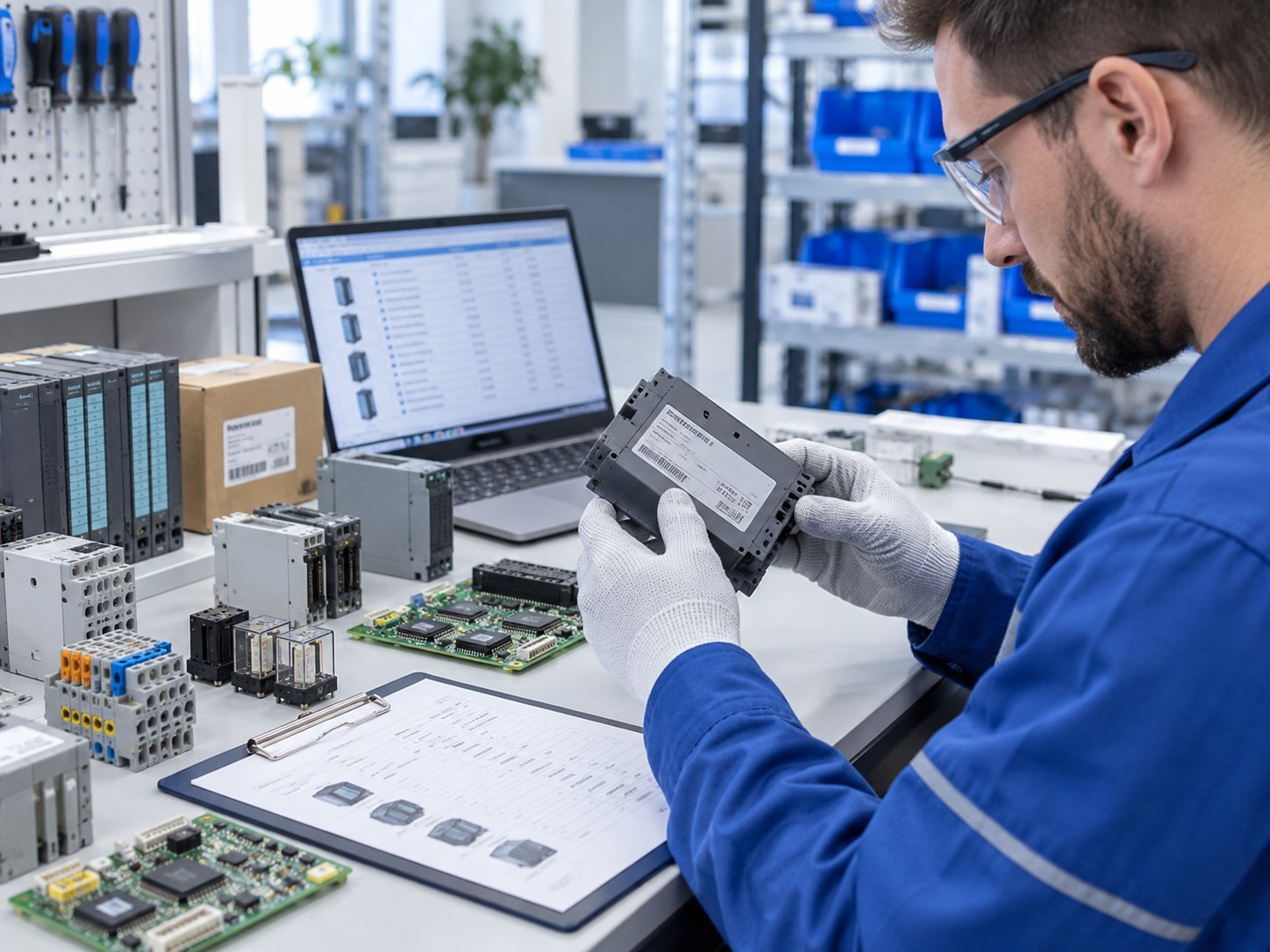
PLC commissioning is the point where drawings, software and real equipment finally meet. Most start-up problems are not caused by a failed PLC CPU. They usually come from incorrect wiring, reversed signals, wrong scaling, missing interlocks or assumptions that were never tested under real conditions.
A structured commissioning process reduces those risks and makes troubleshooting faster.
Stage 1: Bench-Test the Control Hardware
Before field energization, verify the PLC rack, power supply, CPU, communication modules and representative I/O modules.
Confirm firmware compatibility and communication with the engineering software. Check that the project can be downloaded, backed up and restored.
If remote I/O or drives are used, test at least one complete communication path before site installation.
Stage 2: Verify Every Field Signal
I/O checkout should be performed systematically. Do not assume that a sensor wired to the correct terminal is assigned to the correct PLC tag.
For each signal, confirm the field device, terminal number, PLC channel, software tag and HMI indication.
Analog channels should also be checked at more than one point. A 4–20 mA loop that reads correctly at 12 mA can still have scaling problems at the endpoints.
Stage 3: Test Interlocks Before Automatic Sequences
Interlocks and permissives should be tested before full automatic operation.
Examples include low pressure, high temperature, motor overload, valve position mismatch, missing downstream readiness and communication loss.
The objective is to prove that the system blocks unsafe or invalid actions before sequence testing begins.
Stage 4: Run Sequences One State at a Time
Automatic sequences should be commissioned in controlled steps. Verify each transition condition before allowing the program to advance.
This makes it easier to find race conditions, timing problems and missing feedback.
AI-assisted code generation may accelerate programming, but real commissioning still requires physical process knowledge. Our control engineering skills analysis explains why failure-mode thinking becomes more important as software generation gets faster.
Stage 5: Test Faults Deliberately
A system that only works under perfect conditions is not commissioned.
Simulate sensor failures, communication loss, emergency stops, motor trips and abnormal sequence interruptions. Confirm that the system enters a safe state and gives operators enough information to recover.
Recovery logic deserves the same attention as normal production logic.
Stage 6: Validate Alarms and HMI Behavior
Every important alarm should be understandable without opening the PLC program.
Check alarm text, priority, timestamp behavior, acknowledgement and reset conditions. Avoid vague messages such as “Machine Fault” when the PLC already knows the actual failed condition.
Good diagnostics reduce dependence on the original programmer after handover.
Stage 7: Create a Known-Good Backup
Once testing is complete, save a verified backup of the PLC, HMI, drive parameters, safety configuration and network settings.
Record software versions and firmware versions. A backup without version information can become difficult to restore years later.
Stage 8: Hando Over With Evidence
Production handover should include more than a verbal statement that the machine runs.
- Completed I/O checkout records
- Tested interlock list
- Alarm verification
- Known limitations and temporary bypasses
- Final software backups
- Network and device configuration records
- Operator and maintenance notes
These records make future troubleshooting much faster and reduce the risk of undocumented changes.
Commissioning Is Also a Data-Quality Exercise
Commissioning determines whether tags, scaling, equipment names and operating states match the real plant. Those details later affect historians, dashboards and AI systems.
If the control layer is poorly documented, higher-level analytics inherit the same confusion. This is one reason connected data projects should begin with correct field and control-system context.
Source and Rewrite Note
This article was independently rewritten and expanded from the PLCProTech guide Industrial Automation Start-Up Guide: Practical Strategies for PLC Testing, Commissioning, and System Debugging. The workflow, checklist and examples have been restructured for AITUOS Controls.