PRODUCT INFORMATION
Product Overview
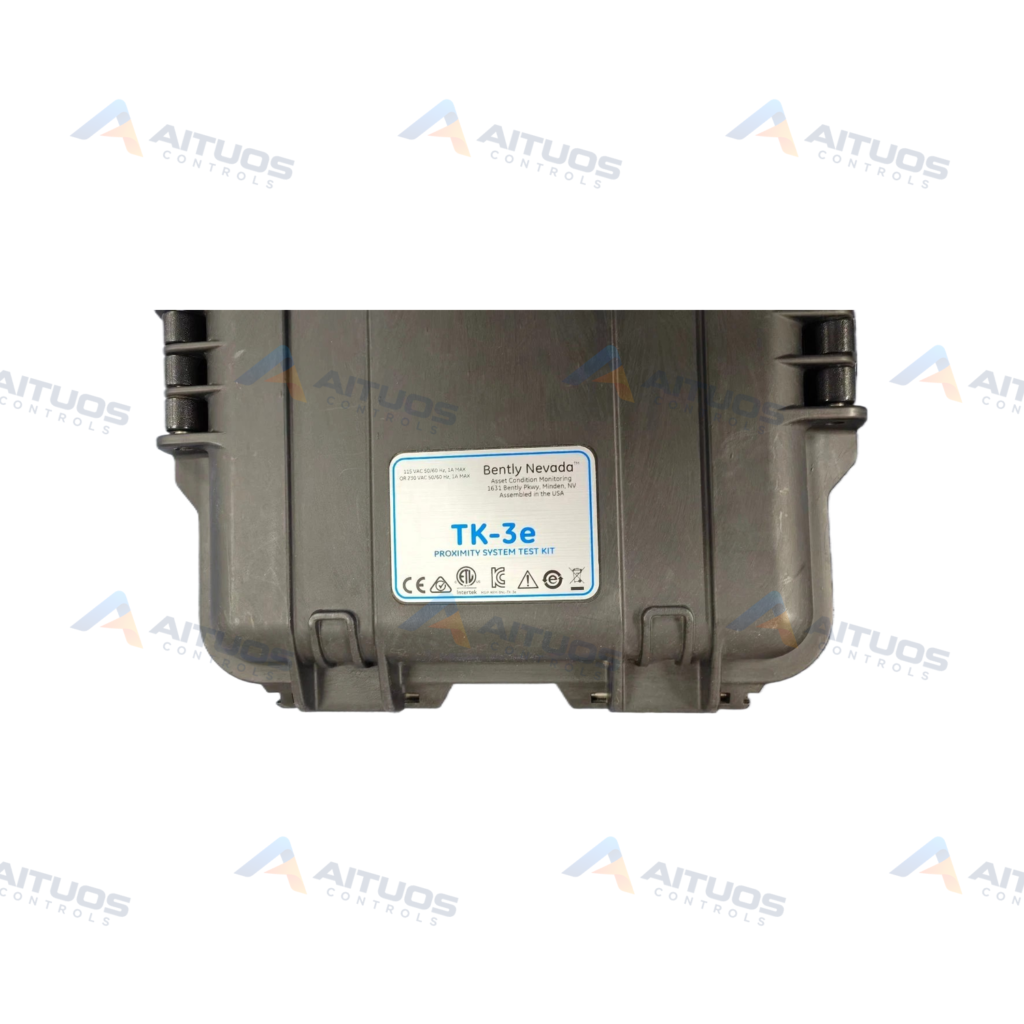
The Bently Nevada 177313-02-02-00 TK3 series unit is an electric-drive proximity system test kit. This instrument simulates mechanical shaft vibration using an AISI 4140 steel wobble plate target. An electric motor provides rotational speeds across 0 to 5000 cpm ±1000 cpm. Peak-to-peak mechanical vibration amplitude spans from 50 to 254 µm.
The assembly includes a metric micrometer spindle with travel spanning 0 to 25.4 mm. Dual input electrical ratings accommodate 95 to 125 VAC or 190 to 250 VAC at 50/60 Hz. This configuration includes a European power cord and carries no regional safety approvals. A protective enclosure provides an IP54 rating against ingress when closed.
TECHNICAL DATA
Technical Specifications
| Parameter | Specification |
|---|
| Drive | Electric |
|---|
| Input power | 95–125 VAC or 190–250 VAC, 50/60 Hz, 1 A minimum |
|---|
| Vibration amplitude | 50–254 µm (2–10 mil) peak-to-peak |
|---|
| Speed range | 0–5000 cpm ±1000 cpm |
|---|
| Micrometer range | 0–25.4 mm |
|---|
| Target material | AISI 4140 steel wobble plate |
|---|
| Dimensions | 195 × 299 × 248 mm |
|---|
| Weight | 5.22 kg |
|---|
| Intended environment | Indoor use only |
|---|
| Maximum altitude | 2000 m |
|---|
| Operating temperature | 0 to +50 °C |
|---|
| Continuous operation limit | +40 °C maximum |
|---|
| Storage temperature | -18 to +65 °C |
|---|
| Humidity | 95% non-condensing |
|---|
| Enclosure rating | IP54 when closed |
|---|
| Exact options | 02 = metric; 02 = European cord; 00 = no approvals |
|---|
TECHNICAL INFORMATION
Features
- Electric motor drive provides a variable speed range from 0 to 5000 cpm ±1000 cpm.
- AISI 4140 steel wobble plate produces 50 to 254 µm peak-to-peak vibration.
- Integrated metric micrometer mechanism supports position verification across 0 to 25.4 mm.
- Dual voltage input accepts 95–125 VAC or 190–250 VAC at 50/60 Hz single-phase power.
- Protective enclosure provides an IP54 environmental ingress rating when closed.
- Supplied with a dedicated European electrical power cord.
TECHNICAL INFORMATION
Applications
- Bench verification of proximity probe position scale factors.
- Dynamic vibration amplitude verification for proximity measurement systems.
- Indoor bench testing and calibration of eddy current transducer systems.
TECHNICAL INFORMATION
Connections / Interfaces
- Detachable European AC power cable interface.
TECHNICAL INFORMATION
Installation Guidelines
- Operate the instrument strictly indoors at elevations below 2000 m.
- Maintain ambient operating temperatures below +40 °C during continuous testing sessions.
- Supply 95 to 125 VAC or 190 to 250 VAC power with at least 1 A capacity.
- Keep the enclosure cover securely latched when not in use to preserve the IP54 rating.
TECHNICAL INFORMATION
Configuration Guidelines
- Option 02 specifies a metric micrometer spindle spanning 0 to 25.4 mm.
- The second option 02 specifies a European AC power cord configuration.
- Option 00 indicates standard build with no agency safety approvals.
PART VERIFICATION
Before You Order
Industrial automation parts can share similar model names, suffixes and revisions. Confirm the complete manufacturer Part Number before purchase.
01Check Part NumberMatch the complete ordering code on the existing unit.
02Confirm RevisionCheck suffix, hardware or firmware when applicable.
03Send a Label PhotoWe can review a clear label photo when identification is uncertain.
ORDERING PROCESS
From RFQ to Dispatch
1Submit Part Number2Verify Product Identity3Confirm Stock & Condition4Issue Quotation5Dispatch & Tracking
PRODUCT FAQ
Frequently Asked Questions
What is the primary function of the Bently Nevada 177313-02-02-00?
It tests proximity probe systems using static micrometer positioning and dynamic wobble plate vibration.
What input electrical power does this test kit require?
It requires 95–125 VAC or 190–250 VAC at 50/60 Hz with a 1 A minimum supply.
What do the 02-02-00 ordering options represent?
They indicate a metric micrometer, a European power cord, and no regional approvals.
What are the operating temperature and altitude boundaries?
It operates from 0 to +50 °C up to 2000 m altitude indoors. Continuous operation requires ambient temperatures at or below +40 °C.