PRODUCT INFORMATION
Product Overview
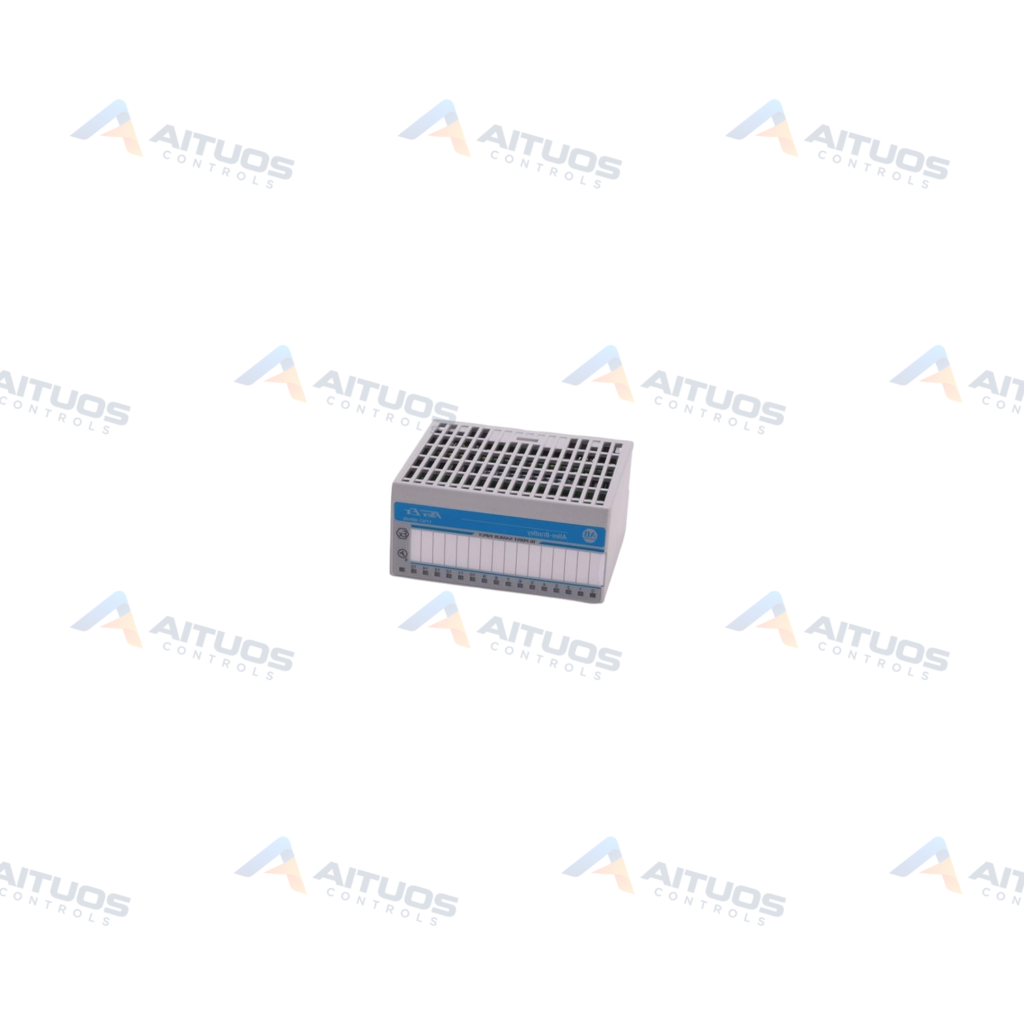
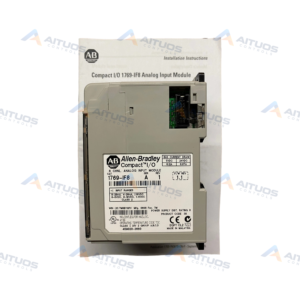
The Allen-Bradley 1797-OB4D is an I/O Module belonging to the FLEX I/O platform. It provides four non-isolated sourcing output channels that reference a single common power supply. Each channel status is indicated by a yellow LED showing the active output state. The backplane updates all four output channels every 2 milliseconds. This module operates on a 25V DC nominal circuit with field-side power consumption of 7.5 Watts. Module power dissipation measures 5 Watts, yielding a thermal dissipation rate of 17.07 BTU per hour.
The 1797-OB4D includes integrated fault detection with a status indicator that blinks red when faults occur. Channel diagnostics detect short circuit conditions and broken wire lead breaks via module data bits. The electronic protection system manages overload and short circuit conditions while reporting errors directly to the controller. Supported load impedance ranges from 30 to 5000 ohms per output channel. Standard operating temperatures range from 0 to 50 degrees Celsius at 5 to 95 percent relative humidity. Field wiring supports wire conductors up to 4 square millimeters.
TECHNICAL DATA
Technical Specifications
| Parameter | Specification |
|---|
| UPC | 612598182909 |
|---|
| Weight | 0.75 lbs (0.34 kg) |
|---|
| Outputs | 4 |
|---|
| Output Type | Nonisolated Sourcing |
|---|
| Load Range | 30-5000 ohms |
|---|
| Electronic Protection | Lead Break, Overload, and Short Circuit |
|---|
| Power Supply | 9.5V DC |
|---|
| Module Field-side Power Consumption | 7.5 W |
|---|
| Power Dissipation | 5 W |
|---|
| Thermal Dissipation | 17.07 BTU/hour |
|---|
| Conductors Wire Size | 4 mm^2 |
|---|
TECHNICAL INFORMATION
Features
- Provides four non-isolated sourcing discrete outputs referencing a single supply.
- Updates all four output channels across the backplane every 2 milliseconds.
- Incorporates per-channel electronic protection against lead break, overload, and short circuits.
- Features individual yellow status LEDs for output states and a red blinking fault indicator.
- Reports channel short-circuit and lead-break fault data bits directly to the controller.
- Accommodates field load impedance values between 30 and 5000 ohms.
TECHNICAL INFORMATION
Connections / Interfaces
- Provides four non-isolated sourcing output channel connections sharing a single common supply.
- Interfaces with the local FLEX I/O backplane for data updates every 2 milliseconds.
- Transmits diagnostic status bits to the controller over the backplane bus.
TECHNICAL INFORMATION
Installation Guidelines
- Mount the module in an environment maintaining ambient temperatures between 0 and 50 degrees Celsius.
- Ensure operating humidity remains between 5 and 95 percent non-condensing.
- Maintain operational elevations within the recommended limit of 1000 meters.
- Terminate field wiring using conductor sizes up to 4 square millimeters.
PART VERIFICATION
Before You Order
Industrial automation parts can share similar model names, suffixes and revisions. Confirm the complete manufacturer Part Number before purchase.
01Check Part NumberMatch the complete ordering code on the existing unit.
02Confirm RevisionCheck suffix, hardware or firmware when applicable.
03Send a Label PhotoWe can review a clear label photo when identification is uncertain.
ORDERING PROCESS
From RFQ to Dispatch
1Submit Part Number2Verify Product Identity3Confirm Stock & Condition4Issue Quotation5Dispatch & Tracking
PRODUCT FAQ
Frequently Asked Questions
How many outputs does the Allen-Bradley 1797-OB4D provide?
The module provides four non-isolated sourcing output channels referencing a single common supply.
What diagnostic protections are built into the 1797-OB4D module?
The module includes electronic protection against lead break, overload, and short circuits. It transmits fault bits to the controller.
How quickly does the backplane update channels on the 1797-OB4D?
The backplane updates all four output channels every 2 milliseconds during operation.
What is the recommended operating temperature range for the 1797-OB4D?
The module operates within an ambient temperature range of 0 to 50 degrees Celsius.